Easy Beautiful Signature Examples: 21 Name Ideas
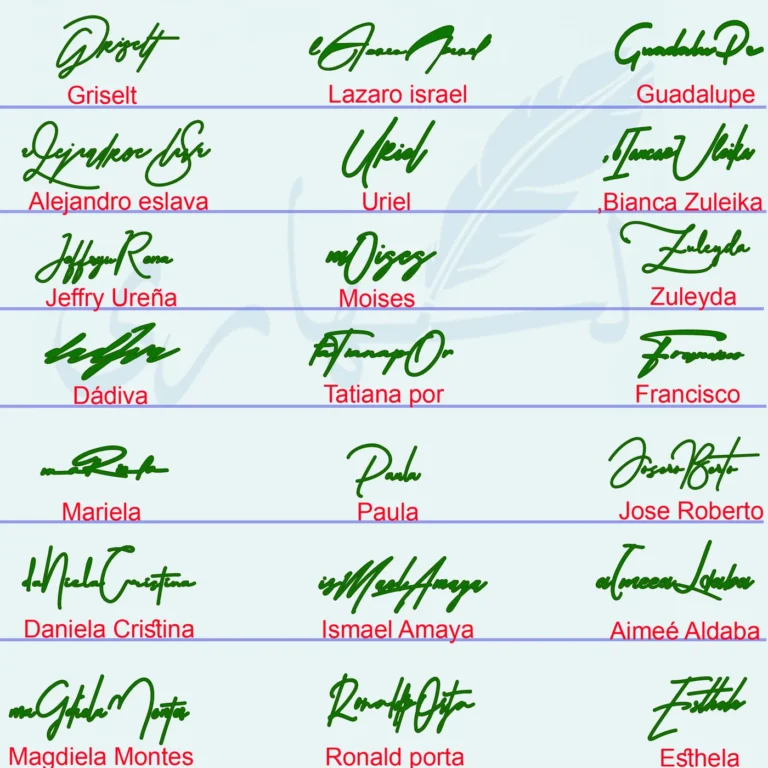
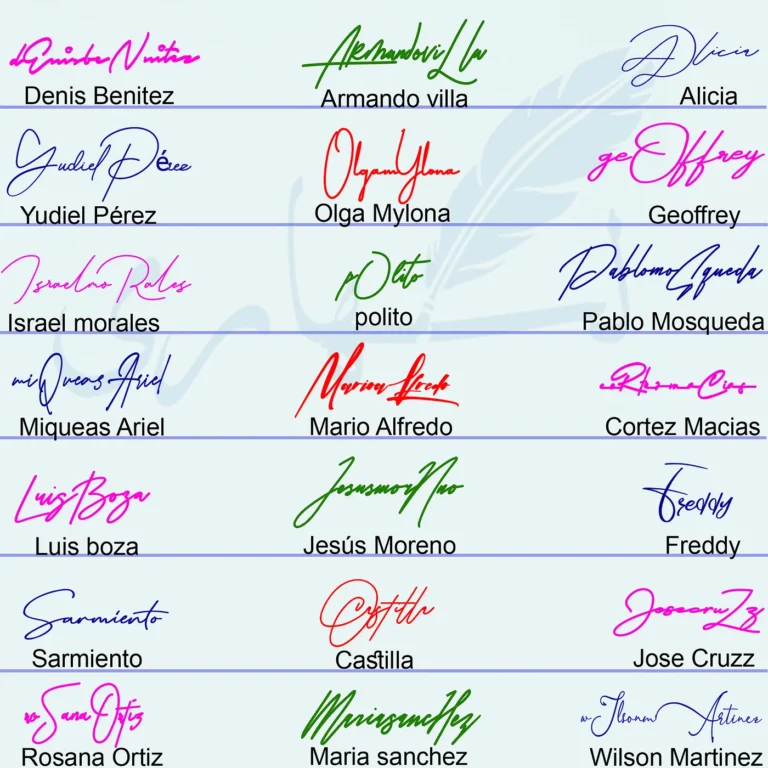
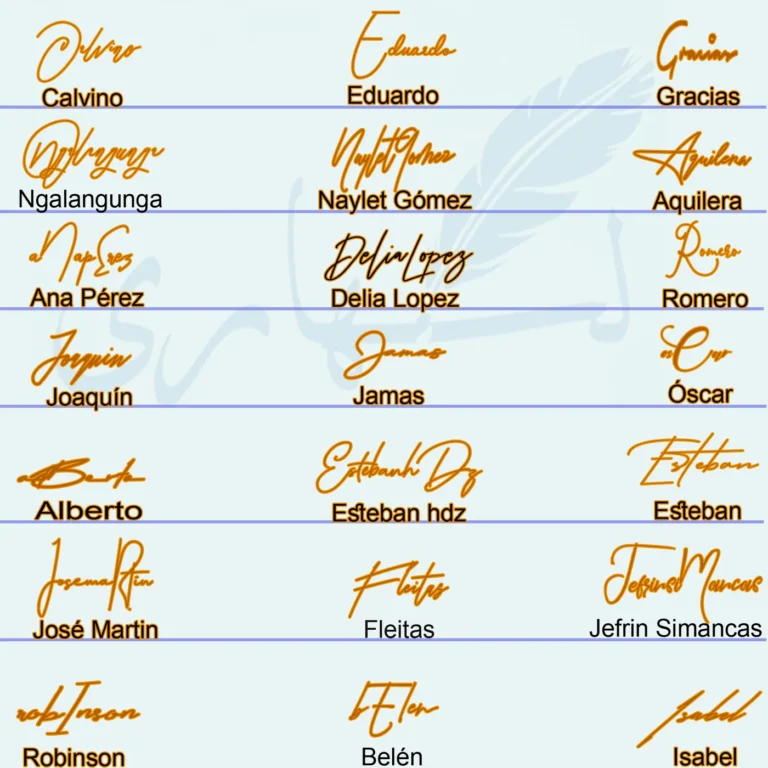
Easy beautiful signature examples usually share three qualities: one clear focal letter, a simple connection through the name, and a finishing stroke that does not require careful drawing. This gallery contains 21 designs ranging from readable single-name signatures to more decorative two-word forms.
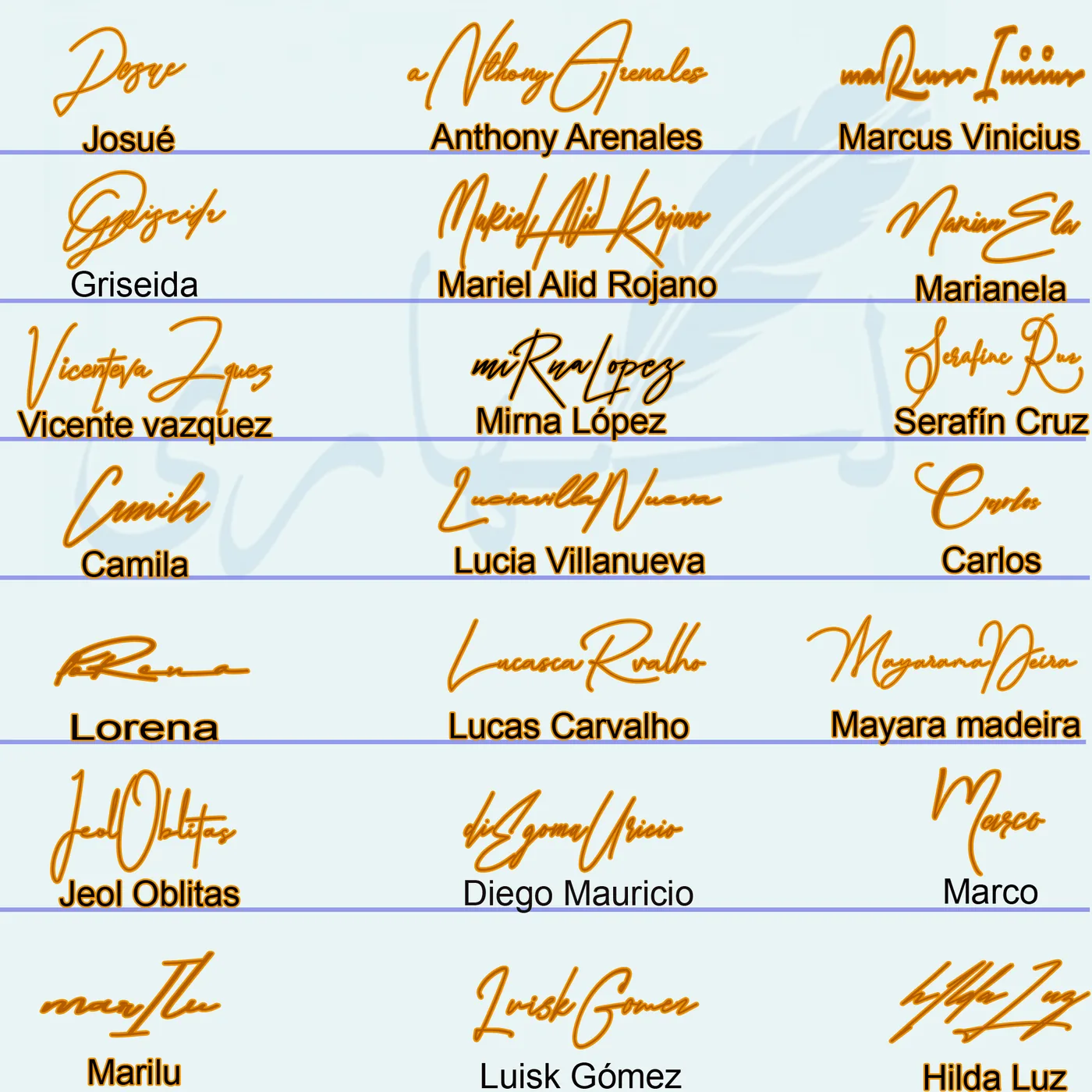
“Easy” and “beautiful” are not opposites. A simple signature can look polished when its proportions are balanced, while an ornate design may feel awkward if the loops compete or the ending changes every time. Use the examples to decide how much detail your hand can repeat comfortably.
In this gallery
- Find the easiest structures
- Understand what makes them attractive
- Choose by name length
- Simplify and practise
Which signatures in the gallery are easiest to write?
Single-name designs with one dominant capital
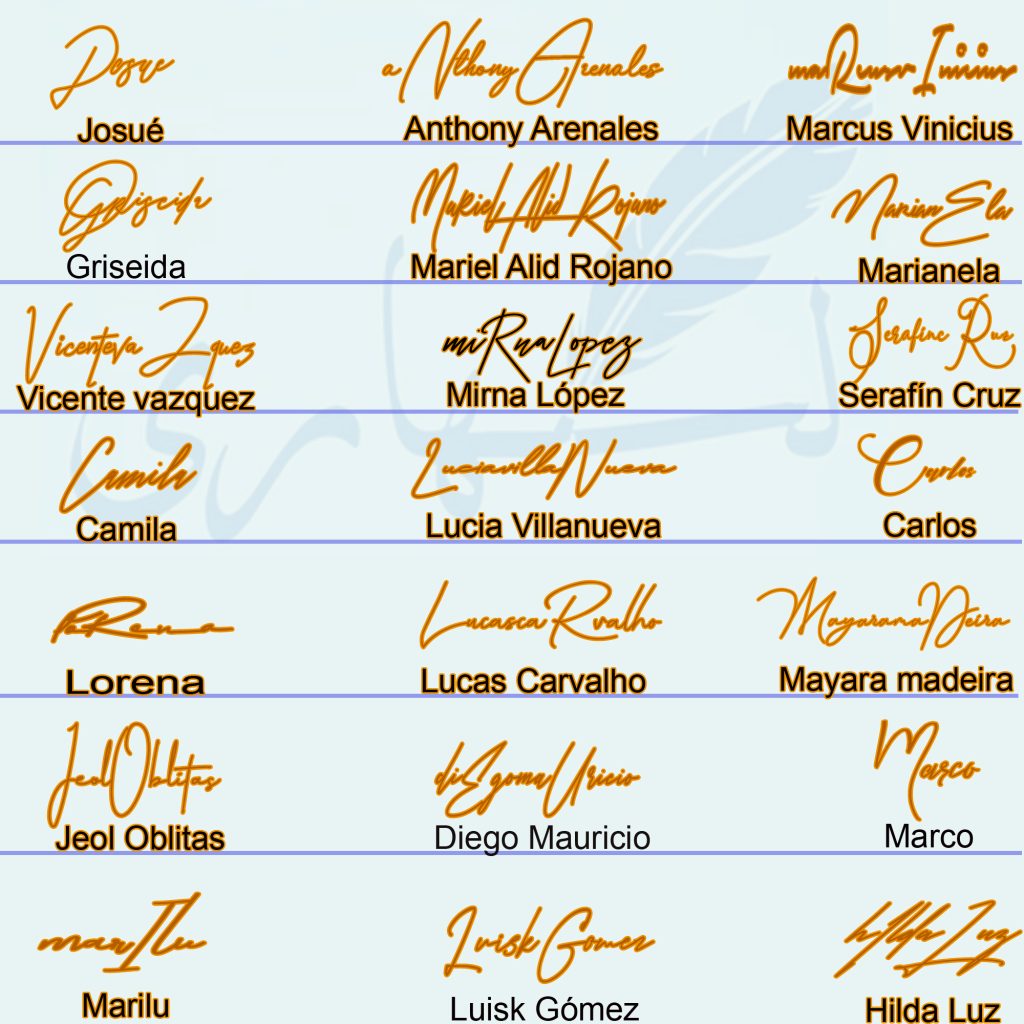
Josué, Camila, Carlos and Marco use a straightforward formula: a larger opening letter followed by a smaller connected body. Camila and Carlos keep several letters visible, while Marco compresses the middle more strongly. These are useful beginner directions because the signature has one obvious starting movement and no separate decoration to remember.
Readable two-word signatures with controlled capitals
Anthony Arenales, Vicente Vazquez, Lucia Villanueva and Lucas Carvalho show how a longer name can remain elegant without giving every letter equal attention. The first capital establishes the style, the second capital signals the surname, and the smaller strokes move more quickly between them.
Compact signatures that trade detail for speed
Lorena, Marilu and Luisk Gómez use shorter internal movements. They can be quicker once learned, but compact does not always mean easier: the crossing points and compressed curves must still land in a similar place. Begin with a readable version before reducing the middle.
Decorative examples that need more practice
Griselda, Mariel Alid Rojano, Serafín Cruz, Jeol Oblitas and Hilda Luz include taller capitals, extended loops or several directional changes. They are visually expressive, but a beginner should borrow only one feature—such as the first loop or final tail—rather than copying the entire construction.
What makes a simple signature look beautiful?
- Proportion: the opening capital is large enough to lead but not so large that the name looks detached.
- Rhythm: the smaller letters move in a consistent direction instead of changing height randomly.
- Negative space: loops remain open and the two parts of a full name are not crowded together.
- One visual accent: a long initial, underline or final curve is more effective than several unrelated decorations.
- Clean finish: the final stroke slows or stops deliberately instead of trailing into an accidental scribble.
Beauty is also practical. If a design only looks good when copied very slowly, it is an illustration rather than a usable everyday signature. The best version is the simplest one that keeps the character you like.
Choose an easy signature by name length
| Name pattern | Examples to study | Recommended simplification |
|---|---|---|
| Short single name | Josué, Camila, Carlos, Marco | Keep the capital visible and connect most remaining letters |
| Long single name | Marianela or Griselda | Emphasize the first letter and reduce repeated curves in the middle |
| Two medium names | Vicente Vazquez or Lucia Villanueva | Use one main capital and a smaller surname capital |
| Long first and last name | Anthony Arenales or Lucas Carvalho | Compress lowercase letters and avoid a separate underline |
| Two short words | Hilda Luz or Marilu-style construction | Use two capitals but limit extra loops |
For examples designed specifically around lower complexity, visit the simple signature ideas collection. If you need a restrained document-friendly direction, compare the professional signature ideas as well.
Simplify a beautiful design in four passes
- Pass 1: write the full name clearly. Keep the natural connections and identify the letter that already has the best shape.
- Pass 2: enlarge only the focal capital. Do not decorate the surname yet.
- Pass 3: shorten the middle. Reduce repeated humps, dots or small turns while preserving the direction of the name.
- Pass 4: test one ending. Compare a clean stop, short tail and integrated underline, then keep the easiest option.
Write the final candidate five times without pausing between attempts. Compare the opening capital, overall width and ending. Small differences are normal; a completely different silhouette means the design still contains too many unstable details.
Frequently asked questions
What is the easiest beautiful signature style?
A large first initial with a short connected body is a reliable starting point. It creates a clear focal letter while keeping the movement simple.
Can a full-name signature be easy?
Yes. Make one capital dominant, keep the second capital smaller, and simplify the lowercase letters. The goal is a hierarchy, not equal detail across the full name.
How many loops should I use?
Use only the loops that arise naturally from your letters. One strong loop is usually easier and cleaner than several decorative loops.
Is a very short signature always easier?
Not necessarily. A compact abstract mark may require precise crossings. A slightly longer but more natural connected name can be easier to repeat.
How long should I practise a new design?
Practise in short sets over several days. Stop when your hand becomes tense, then compare the versions later and simplify the part that changes most.
Single Signature Examples from This Collection
These individual handwritten signature images are included as supporting examples so visitors can compare one name at a time. Each caption preserves the name reference and makes it easier to study initials, loops, finishing strokes and overall signature flow.